Thursday, 15 December 2016

To the Man I Thought Was ‘The One,’ (or My Almost, Not Quite Love)

This is the last time I will ever write about you. I’ve given you pages, chapters, BOOKS of my life…but now it’s time for me to write a new story now. One without you in it.

I’m ready to do that now. But to start a new chapter, you must first close the old one.

For years I asked God to bring closure to this relationship with you…or if not closure, at least a little clarity about what it all meant. This on again, off again, never quite together, never quite apart, yes and no, back and forth relationship. What was your greater purpose in my life, if not to be my forever love? It just didn’t make sense to me. But then again, I guess that’s what faith is all about: Trusting God and moving forward anyway, even when it doesn’t make sense. And that’s what I did. For seven long years. I thought I knew the ending. I thought I knew God’s plan.

But I was wrong.

Instead of walking down an aisle to you, I walked down a long, often heartbreaking path with you…one that tested me, challenged me, tried me, and always, always pushed me closer to God. I spent years trying to get closer to you, but God in His infinite wisdom knew that what I really needed was more of Him. And that’s what this relationship represents to me. It’s what it will always represent to me: A giant question mark in my life that pushed me ever closer to the One who is the answer…the One who is the beginning and the end…the One who loves me enough to heal any wounds left by someone who could never quite love me enough. It wasn’t until I was willing to finally surrender you 100% to God that He was able to show me the reason for you. The bigger picture. The purpose of every tear, every disappointment, every one of the seven long years I spent waiting for you to love me back.

You see, my almost, not quite, love…the number seven in the Bible represents “completion.” And God showed me early on in that seventh year of you and I that it would be the year of our completion, one way or the other. And over the course of that seventh year, the meaning of our relationship came completely into focus: You weren’t the one I was meant to share my life with. You never were. You were the one who was there to teach me how to share my life, my whole life, my whole heart and soul, with God. Completely and unequivocally, holding nothing back.

“Pursue Me the way you want a man to pursue you, Mandy…” God had whispered into my heart during one of our many quiet times.

You see, my almost, not quite, love…there came a day when my eyes were opened to the fact that the way you had been with me for all those years -- wishy-washy, lukewarm, undecided, half in, half out – was the way I had been with God. Never fully committed. On fire one day and ice cold the next. Unwilling to invest my full self into the relationship. How it must have broken His heart.

The same way you broke mine, over and over again.

And one final time, on a summer day of that seventh year, when you looked me in the eyes, and finally told me once and for all: I don’t love you.

You could have told me that at any point during those seven long ears…but you didn’t.

And you know what? I’m glad you didn’t. Because the further away you pulled from me…the closer you pushed me to God. Oh, the conversations I had with God that started off about you but turned into intimate, precious, communion with Him about every topic under the sun! I spoke, He listened. He spoke, I listened. So many heartfelt, transparent, real, raw, candid moments I shared with my precious Jesus…all because I was driven to my knees in prayer about you and for you.

So you see, my almost, not quite love: I don’t regret you. How could I? We had some beautiful moments over the years, yes…but the moments I had with God as a result of our not-so-beautiful moments are ones I will cherish forever. No, I don’t regret you. You taught me how to embrace the Beautiful Uncertainty of my life and to trust that nothing, absolutely nothing bad can happen to me that God can’t find a way to turn for good.

You taught me that giving one’s heart away is always brave, regardless of whether or not the other person chooses to accept it.

You taught me how to love myself better. You taught me how to love other people better. And most of all, you taught me how to love GOD better.

Without you, I might not be the woman I am today.

Thank you.

Mandy


Friday, 25 November 2016

What Is It That We Really Want From Our Partners?

... and the 4 major choices everyone has to make. 

Jeremy Nicholson M.S.W., Ph.D.
The Attraction Doctor
 
 
When we think about human mate preferences, our own unique and specific preferences first come to mind. After all, each of us can speak to what we personally find attractive and compatible in a partner. For some, that might be a person who is handsome or beautiful in a particular way. For others, it might be a special, positive personality characteristic. Regardless, we tend to think that each of us seeks some trait or combination of traits that is completely different and distinct.

Beneath that, however, there are certain categories of features that we all consider when choosing a romantic partner. In other words, we all pick something unique, but after selecting from some standard types of partners and traits.

Therefore, by knowing the general categories people evaluate in a mate, you can make better specific selections with your own partners—and be more desirable to others, too.
 

Research on Human Mate Preference

The idea that there are universal ideals or dimensions in mate preference emerged from research by Fletcher and associates (Fletcher et al., 1999). In two studies, the team asked undergraduate students to list and then rate ideal romantic partner characteristics. Using factor analysis on the results, the researchers found three underlying dimensions that the participants considered when describing their mate preferences. 

  • Warmth-Trustworthiness. This category contained descriptions such as: understanding, supportive, considerate, kind, good listener, sensitive, trustworthy, warm, affectionate, reliable, friendly, communicative, honest, mature, stable, romantic, broad-minded, easygoing, and self-aware.
  • Vitality-Attractiveness. This category contained descriptions such as: adventurous, nice body, outgoing, sexy, attractive, good lover, attractive lifestyle, sporty, athletic, confident, independent, ambitious, interesting, spontaneous, good fun, sense of humor, and assertive.
  • Status-Resources. This category contained descriptions such as: good job, financially secure, nice house/apartment, appropriate ethnicity, successful, dresses well, and appropriate age.

Further studies by Fletcher and associates (1999) confirmed and validated these three categories. In addition, they also showed a relationship between these categories and actual partner satisfaction: The more a partner matched an individual's ideals, the more positively the individual evaluated their current relationship.
 
Shackelford, Schmitt, and Buss performed another analysis of mate preference dimensions (2005). They re-analyzed an older data set, containing mate preference ratings provided for 18 characteristics by several thousand participants from cultures around the world. Although this research found some similar categorical results as Fletcher and team (1999) above, the larger data set seemed to indicate that preferences aligned on certain dimension of trade-offs as well, specifically:

  • Love vs. Status/Resources. People make psychological trade-offs to seek out either a partner who is ambitious, has good financial prospects, and is of high status, or who is loving and attracted to them.
  • Dependable/Stable vs. Looks/Health. Mate seekers also look for a lover who is primarily either stable and mature, or good looking and healthy.
  • Education/Intelligence vs. Desire for Home/Children. Individuals pick a mate who is either more highly educated and intelligent, or more oriented toward desiring a home and children.
  • Sociability vs. Similar Religion. Finally, people appear to either focus on finding a partner who has a sociable and pleasing disposition overall, or someone who has a similar religious background. 
 
Additional results showed that men and women often differ in how they resolve these trade-offs: Specifically, men regularly choose to look for a loving partner who is good looking and healthy, and wants a home and children. Women, in contrast, frequently prefer a mate who has status and resources, and is dependable, stable, educated, and intelligent. There was no gender difference in expressing a preference for sociability or religion. 

Identifying Your Ideals and Trade-offs


Given the research above, it seems that we all do consider the same general categories of features when choosing romantic partners. Nevertheless, each of us also has different preferences and makes individual trade-offs among those categories to meet our unique needs.

If you are unclear about what you want and need in a romantic partner, considering the categories and trade-offs above is a good place to start. Try to think about the following:


  • Decide on preferences and trade-offs. Everyone has a different balance of features—and no one's approach is perfect. Therefore, it is important to decide which features are essential for your satisfaction, and which you like­ but could do without. Given the choice, do you want someone who cares for you emotionally, or provides tangible resources? Do you prefer they focus on a partner's physical health and attractiveness, or their mental health and stability? Should they spend their time on education and career achievement, or managing a loving home and caring for children? Would you rather a mate who is generally social and compatible, or who shares your deeper values and religious ideals?

  • Assess yourself, too. Relationships are a trade and exchange. Therefore, potential partners will be looking for a match for their own ideals and making their own trade-offs, just like you. As a result, it is important to evaluate what you have to offer back to a partner: How have you made yourself attractive? What is positive and warm about your personality? What resources and skills do you have to share? Along the way, what trade-offs have you made in developing yourself as an individual and partner?

Overall, while we each desire a unique combination of features in a partner, we all choose from among the same basic categories and trade-offs. We work with those categories and compromises as we make choices about who we will also become as partners. Therefore, when considering what you want in a romantic partner and what you will give in return, it is helpful to keep those basic criteria in mind—and decide on the specifics from there.


Friday, 18 November 2016

An Age by Age Guide for What to Expect From Kids – And What They Need From Us

ZenParent

https://zenparent.in/parenting/age-age-guide-expect-kids-need-us

Whoa. That’s some detail. Very solid too. As adults, we’re quite likely to trivialise kids’ problems – we have more ‘important’ things to worry about. Well, they’re young, their world is young, their problems are young. And they need our help to navigate through it all, as Karen shows us.

Being a kid or a teen is not for lightweights – it’s tough out there! There are important things that need to be done, that only they can do. The nature of these jobs depends on the developmental stage they are at. Knowing what is normal behaviour for children and teens can help to smooth the path for everyone involved.

Even as adults, we can be prone to tantrums, tears and wanting to give the world (or particular people in it) an almighty spray sometimes. For the most part, we can hang to the dramatics and anything that might land us in trouble, but even with all of our experience, our fully developed brains, and our capacity to see around corners, it’s hard some days. Imagine what it’s like for our kids.

Understanding what our kids are wrestling with and the developmental goals they are working towards will make their more ‘frustrating’ behaviours easier to deal with. Things will run smoother if we can give them the space and support they need to do whatever it is they need to. Of course, none of this means the total surrendering of boundaries around what’s okay and what isn’t in terms of behaviour. What it means is responding with greater wisdom, clarity and with more appropriate consequences. Life just gets easier for everyone when we are able to take things less personally.

Here are some important developmental stages and the difficult behaviour that might come with them. You’ll often find that their behaviour, though unruly and baffling at times, is completely normal and a sign that your child is flourishing and making his or her way through childhood or adolescence exactly as they are meant to.

The ages of the stages are just a guide. When checking to see whether your kids are on track, read the stages around the actual age of your child. The progression through the stages is more important than the age at which this happens. As long as kids are moving through the stages, it doesn’t matter if they get there slower than other kids. 

Infants & Babies (0-12 months).

  • Everything will go in the mouth – hands, feet, food, toys, shoes – you name it.
  • If they are crying, there is something they need – a sleep, a cuddle, food, changing. They don’t yet have the words to communicate, but crying is a spectacularly effective way for baby humans to get big humans to move mountains for them. One of the beautiful things about babies is that they will never ask for more than they need.
  • Wary of strangers and might get upset when familiar people aren’t close by.
  • Babies will stare. They love faces and will stare at faces in real life, in books and in mirrors. Oh to be at an age where staring at other people is socially acceptable – and cute.

The support they need.

Babies have an important job to do – they need to learn whether or not they can trust the world and the people in it. For their part, they will work hard to give you the opportunities to show them how safe and secure they are. They might not have much of a vocabulary but they are masterful little communicators when it comes to letting you know when something isn’t quite right. Be consistently attentive to their needs so they can feel the world as a safe and secure one for them. Feed them when they are hungry, comfort them when they are scared, cuddle them when they need to be with you. This will form the foundation for their exploration of the world, their independence, their confidence and self-esteem and their relationships. 

1-2 years.

  • Will become more interactive.
  • No understanding of intentionality – they see, they do without thinking about why or what it means. For example, when they bite, it is not to hurt, when they grab toys from other kids it’s not to cause upset, it’s to … well, everyone knows that things are for grabbing, right. Or eating.
  • Will follow their curiosity and will pull things down or apart to see what happens. Ditto with throwing anything onto the floor.
  • Not developmentally able to share.
  • Might seem bossy and selfish, but keep in mind that anything they are interested in or considers to be theirs will be seen as an extension of themselves. Of course nobody else is entitled to take it!
  • Beginning to understand possession, and developing a strong sense of self.
  • Two of their favourite words to say, ‘Mine!’ and ‘No!’
  • Two of their least favourite words to hear, ‘Mine!’ and ‘No!’
  • Will often wake during the night.
  • Towards the end of this stage, they may become more defiant as they start to experiment with their independence. May tantrum because they become frustrated by their lack of words and their lack of ability to communicate.
  • Tantrums will also be driven by their experience of big emotions (frustration, anger, sadness, shame) that they don’t have the words for.
  • Will be more likely to play alongside other kids, rather than with them.

The support they need.

  • Their attention span is still fairly short, so use distraction to direct them away from what you don’t want them to be doing.
  • When you give them a new rule or direction, it’s likely that the old one will be forgotten. Sometimes you will love their short attention span. Sometimes you won’t.
  • Be positive when you see them doing the right thing.
  • Start letting them know the things that aren’t okay.
  • Ignore the small stuff. There’s so much to learn so it’s best not to overload them. Let them get used to the important things first.
  • Your child will be starting to understand what you are asking but for the sake of your own sweet sanity, let go of the expectation that they will do as you ask. Keep asking and guiding, but don’t take it personally if it doesn’t happen straight up. Or at all.
  • Be kind and gentle when correcting. They are doing their very best with what they have. If you ask for too much you might end up with a more anxious or more defiant or less confident three year old.
  • Help them put words to what they are feeling, ‘It’s upsetting when you have to pack your toys away and you want to keep playing isn’t it.’ 
 

3 years old.

  • Will experiment with independence. May lead to tantrums.
  • Will want increased control. May lead to tantrums.
  • Will become frustrated when disappointed. May lead to tantrums.
  • May see an increase in tantrums.
  • Will flip between wanting to be independent (‘I do it!’, or ‘by myself’) and wanting to be treated like a little person (‘carry me’ or ‘you do it’).
  • Will form a special attachment to the word ‘no’ and will practice it often. Even when they might mean ‘yes’. (Ahhhh toddlers! Fortunately, evolution has given them a profound capacity for cuteness while they are sleeping. This is important for those catastrophic events, such as when you miss the notification that sandwiches are now to be served as little triangles, not little squares as was previously deemed acceptable. If this happens, just go with it – you’ll need your energy for when they realise you haven’t bought the toothpaste with Elsa on the tube.)
  • Might stutter or stammer.
  • Will start to assert control over their environment by wanting to plan activities, do things by themselves, try challenging things.
  • Might keep calling you back when they are put to bed.
  • Might develop sudden fears and phobias.
  • May confuse real and make believe, so may have one or a collection of imaginary friends.
  • Still won’t understand sharing and will often assert ownership, ‘Mine!’.
  • Might show jealousy when parent gives attention to other children.

The support they need.

  • Write this down, ‘It won’t be like this forever’. Now stick it on your mirror where you’ll see it every day.
  • Let them know when they do something well. They want to know that you’re happy with them and that they’re doing okay.
  • Be gentle when they get it wrong. Your child wants to do the right thing but has things to do and places to be along the way. Don’t come down hard on mistakes – they’re still figuring it all out and they have a way to go. Treat mistakes as opportunities to teach them something valuable.
  • Don’t have too many rules and be consistent with ones that you have. Too many rules and consequences that are all over the place will only confuse them and will set the monkey on your back. If you teach them that sometimes they can get away with it, they’re going to keep going. You’d worry if they didn’t.
  • Use ‘no’ gently and in moderation. You want to encourage their exploration and experimentation with the world and their place in it. Guide them, but don’t take away their initiative. And don’t give them any more reason than they have to use it at you.
  • Give them the freedom and space to play and encourage their experimentation with physical and imaginative play. Support their efforts to initiate play so they can feel their own capacity to influence their environment.
  • Encourage decision making but limit choices (‘Would you like to have a bath first or choose your pyjamas first? Would you like to wear the red shirt or the yellow shirt today? Would you prefer corn or avocado with your dinner?’ And then, maybe when they’re bigger … ‘Would you prefer to make me a tea or a coffee?’ Oh let’s just indulge the glorious possibility of it all for a moment.)
  • Don’t feel guilty about taking time out for yourself to recharge. The battles will be easier when you’re replenished.
  • Have bedtime rituals. Bedtime at this age can be exhausting for everyone. Have a ritual and let it be lovely for both of you – a story, a cuddle, a spray of lavender around the room, a kiss, and the words, ‘Love you. Night Gorgeous Boy,’ – or something.

4 years old.

  • Will start to be critical and will define the world in simple terms. Things and people will be right or wrong, good or bad, nice or not nice.
  • They will start to realise the power of their words and will sometimes use them to get their way or to control others. Their command of language will still be loose, so they will often back up what they are saying with actions (hitting, pushing, grabbing) or non-verbals (tone, volume, facial expressions, posture/stance).
  • Will become competitive.
  • Will still blur reality and fantasy sometimes. Might tell lies, extravagant stories, or have imaginary friend/s.
  • Still building their sense of self and experimenting with independence, so might be stubborn, defiant and bossy.
  • Will do all sorts of things to avoid bedtime.
  • Might have bad dreams.
  • Might develop a fear of the dark or become anxious thought of being separated from parent or caregiver.
  • Will start to enjoy playing with other kids rather than simply alongside them.
  • Will test their limits with you but will still be keen to please and help you out when they can.

The support they need.

  • When you set rules, talk to them about why the rules are important. They are curious and developing their ideas about how the world works. It doesn’t mean they’ll ‘get it’ straight away, or that they’ll comply.
  • Keep your requests simple.
  • They desperately want to make you happy. Let them know whenever you see good behaviour.
  • Don’t argue with a four year old. Just don’t. They’ll out-do you any day and if they don’t have the words or a sound argument, they’ll just keep asking ‘why’.
  • When it comes to less-than-impressive behaviour, ask what happened but don’t ask why they did it. Asking ‘Why did you do that?’ will just encourage a lie because the boundary between fantasy and reality in the world of a four year old is very – very – loose.
  • When they do something wrong, apply gentle consequences but explain why the behaviour is wrong and that you know they can do better next time. They need to know you believe in them – they will do as you do.
  • Be consistent. If you don’t think it’s always important to enforce a rule, your child will, understandably, think it’s not won’t always important to follow it.
  • Encourage their independence but remember they are still young. Let them be little people when they are stressed or tired.
  • Give them lots of kisses and cuddles, even though they are ‘big people now.’

Five years old.

  • Will understand the importance of rules but might divert from the rules when playing. Rules tend to be ‘flexible’ – for them at least.
  • May accuse others of cheating if they don’t win a game.
  • Will start to show empathy and an understanding that other people might have points of view that are different to their own.
  • Will be able to share but might still find it difficult, especially when it comes to their special things.
  • Might be afraid of failure, criticism and spooky things like ghosts or monsters.
  • Attention span will start to increase which will impact on the type of discussions you are able to have with them.
  • Might come across as being an ‘expert’ on everything.
  • Will enjoy joking around and will start to develop ‘potty’ humour.
  • Will be looking to make their own decisions, particularly around what to wear and what to eat.
  • If starting at school, might be moodier, more sensitive or more tired than usual. It’s exhausting having to sit still and concentrate for long periods.

The support they need.

  • Encourage anything that will get your child moving, particularly if it is in a group or a team with others. This will help your child to develop important skills like taking turns, getting along with others, working together, negotiating, compromising, and winning or losing graciously.
  • Set aside time each day to play with your child or spend one on one time together. This will give your child the opportunity to let you into their world, which will always be one of the best places to be. From here you can get a feel for what is going on in their beautifully flourishing minds.
  • Start to expand your child’s emotional literacy by naming and discussing feelings.
  • Connect rewards to responsibilities. ‘How about you help me clear the table and then you can have dessert?’
  • Continue to keep rules simple and try not to have too many.
 

Six years old.

  • It’s pretty likely that they will know a lot more than you. Just ask them.
  • May start tantruming again.
  • Can start to test the limits but will still want to please you and help out.
  • Will seek praise for their school work and for the good things they do.
  • Will seek to master new skills and to feel competent.
  • Might worry about being away from you.

The support they need.

  • Encourage their efforts and acknowledge when they have worked hard.
  • Encourage effort over outcome to help them develop a growth mindset and a strong self-belief in their capacity to achieve.
  • Ensure they get the support they need if they are struggling at school.
  • Avoid overpraise or meaningless praise and let them know that they are special, but so are other people.
 

Seven years old.

  • Might tend towards complaining, usually about their parents or the rules, but also about friends and other kids.
  • Will feel misunderstood by many.
  • Can be dramatic about school, friends or life in general.
  • Will try to use words to talk about how they are feeling but may become frustrated and angry when they are upset.
  • Will be becoming more aware of what other people think.

The support they need.

  • Listen and validate what they are feeling and know that you don’t need to fix their problems.
  • Discuss how they might solve the things that are causing them trouble. Give them space and encouragement to come up with their own ideas.
  • Don’t be drawn into the dramatics.
  • Don’t immediately think that things are a mess because they are saying they are.
  • Jump on the positive.

Eight years old.

  • Will want you to think the way they do and will have little tolerance for your difference of opinion.
  • Will be very sensitive to what you think of them.
  • Will often fight with the mother.
  • There won’t be a lot of grey. Things will be black or white, right or wrong, good or bad.
  • This tendency to think in absolutes might cause a little trouble with friendships. Take comfort in knowing that yours won’t be the only small person struggling with this. They’ll be okay – this is the part where they learn about friendships and how to get along with people.

The support they need.

  • When you’re praising their good behaviour, be clear about what it is they have done.
  • Avoid arguing whenever you can. With their black and white thinking, an argument will just mean that someone is right (them) and someone is wrong (you). Instead, ask them to explain their point of view and encourage them to see things from different angles.
  • Spend plenty of time together to cement the relationship for the pull away that is coming at adolescence.

Nine years old.

  • Friends will start to be more important than parents, and this will continue through adolescence.
  • What their friends think will start to become more and more important.
  • Will narrow the friendship field by having closer friendships, but less of them.
  • Will share jokes and secrets with friends.
  • Will push against rules and directions and may disrespect you.
  • Will be able to be loving and silly but will also develop the capacity to be selfish, argumentative and abrasive.

What to do.

  • Provide them with opportunities for independence and to make their own decisions.
  • Avoid being too bossy or directive.
  • Encourage them to start thinking about things from another point of view, ‘What would so-and-so say about that?’ ‘How do you think she felt when that happened?’
 

Ten to eleven years old.

  • The tantrums of childhood will be calming down by now. Enjoy it because adolescence has heard that you’re relaxing and it’s on its way.
  • Might still argue about rules and the necessity and detail of them.
  • Will try to explain away misbehaviour through excuses and justifications. They will fight hard to find the loophole in the rule.
  • Promises become important and they will remember EVERYTHING – except when it’s their turn to take out the rubbish.

What to do.

  • Don’t make promises you won’t be able to keep. Once they have something on you, they have you.
  • Avoid arguing with them whenever you can. They will often have an argument for everything. Hear what they have to say, make your decision, then pull out.
  • Let them push against you in safe ways – let them try different things, express their own opinions, and make their own decisions when appropriate.
  • Know where your boundaries are and be ready to implement consequences when they make a bad decision. Make the consequence about their behaviour, not about who they are.

Adolescence

  • Friends will be more important than family. You’re still important, but there’s something they have to do – find who they will be when they step into the world as a healthy, independent adult. Just like you had to do at their age.
  • What their peers think of them will be a source of stress to them for a while, peaking for girls at age 13 and for boys at age 15. They might go to extra lengths to try to fit in with their peers. This might involve making silly decisions or putting themselves in risky situations. Breathe. It will end.
  • They will become more argumentative and will push against you more. This is perfectly in keeping with their adolescent adventure and their experimentation with independence.
  • May become more emotionally distant from you (don’t worry – they’ll come back but maybe not until they leave their teens).
  • Might not want to be seen in public with you – however cool you are.
  • Will experiment with their image, their identity, and the way they are in the world.
  • They may become sexually active.
  • They might be impulsive and they might start taking risks.
  • They will be more creative and will start to think about the world in really interesting, different ways.
  • They will act like your opinion of them doesn’t matter but it does – as much as ever.
  • They will often misread your emotional expressions – reading anger, hostility or disappointment when you feel nothing like any of that.
  • Their sleep cycle will change. Their circadian rhythm will move them about three hours past where they were as kids. This means that they will fall asleep three hours past the time they used to and unless they are completely exhausted, it will be biologically very difficult for them to fall asleep earlier. They will need about 9-10 hours sleep so will need to sleep in for later.
  • Will want to make their own decisions about the things that affect them.

What to do.

  • Don’t be judgemental or critical – they need your love and connection more than ever.
  • Understand that they need to find their independence from you. Give them the space to do this. Over time, their values will be likely to align with yours.
  • Know that your teen isn’t rejecting you, but is finding their own way in the world – it’s an important, healthy part of being an independent adult – even if it feels bad.
  • Let go of control and go for influence. The harder you fight to control them, the harder they will push against you. The truth is that when it comes to adolescence, we have no control – they will decide how much they involve you in their lives, how much they tell you, and how much influence you have. Make it easy for them to come to you when something happens or when they need guidance.
  • Give them information, but don’t lecture.
  • You may or may not know when they start to become sexually active, so it’s important that they have the information and guidance they need to stay physically and emotionally safe. See here for an age by age guide for what they need to know.
  • Don’t buy into arguments – ask them to state their case and talk to you about the pros and cons of what they want. By nature, teens will overstate the positives and underestimate the negatives. Encourage them to tell you some of the cons – nothing is ever black or white.
  • Be the calming force – breathe and wait for the wave to pass over you. It takes 90 seconds for an emotion to be triggered, to peak and to start to fade, provided you don’t do anything to give it oxygen.
  • Help them to plan ahead and see around corners, but without judgement.
  • Encourage their social connections and give them space to strengthen their relationships. An important part of their development is to decrease their independence on the family tribe and to do this. To do this, they will feel an increased need to strengthen their affiliation with a friendship tribe. Encourage and support this wherever you can.
  • Help them find safe ways to take risks such as sports – competitive and non-competitive.
  • Let them know you will always do whatever you can to collect them from any situation when they want to come home – regardless of the circumstances and how late or far away it might be.
  • Let nothing be off limits when it comes to what they can talk to you about.
  • Wherever possible, let them sleep in to catch up on sleep deficits.
  • Listen more than you talk.


And finally …

Know that along the way from infant to adult, there are some important things that need to be done. There are things to learn, mistakes to be made, boundaries to be pushed, independence to be found. It will be a beautiful, exhausting, baffling, sometimes terrifying, sometimes overwhelming, sometimes traumatic adventure for everyone. Be patient and don’t take their opportunities to learn and grow away from them by taking their mistakes and their less than ideal behaviour personally. Their greatest growth will come from the mistakes they make and the boundaries that they push up against.

Even with the strongest supports in place, they are going to make mistakes – sometimes spectacular ones! Provided they have the support they need, their mistakes will be about their growth, not your parenting.

For our part, it is important that we are there with love, nurturing and a steady hand to guide them and with boundaries for them to feel the edges of themselves against. Understanding what is normal behaviour for children and teens will make this easier. Growing up is a journey of learning, exploring and experimenting – for them and for us.
 
Source: Hey Sigmund


Wednesday, 12 October 2016

The Best Expression of Love Is Time

By Rick Warren — October 12, 2016

“We must show love through actions that are sincere, not through empty words” (1 John 3:18 GW).

The second truth you need to remember if you want to reduce the stress and overload in your life is this: The best expression of love is time.

You spell love T-I-M-E. The Bible says in 1 John 3:18, “We must show love through actions that are sincere, not through empty words” (GW).

The most desired gift of love is focused attention. I want to see your eyes. I want to talk. I want to listen. I want to commune. I want to fellowship. I want you! The greatest gift you can give anybody is your time. It’s the most precious and desired gift because your time is your life.

Time is your most precious commodity. You only have a certain amount of it. God’s already decided the number of days you are going to live. You’re not going to get any more. You can always get more money, but you cannot get more time. Every time you give someone your time, you are giving that person a portion of your life that you will never get back. That’s why the greatest gift you can give someone is your time.

Many people are in time-starved relationships. You live in the same home, but you’re passing each other by night like ships, with a goodbye kiss here and there, and your relationship is shriveling. It’s drying up for lack of attention.

A lot of things can rob a relationship. Work can rob a relationship. Activity can rob a relationship. Too much church involvement or ministry can rob a relationship. Hobbies can rob a relationship.

You may wonder, “How can I have more time for those I love?” Start by turning off the TV and unplugging the computer! It’s amazing to me that people sit and watch a program on TV called “Friends” instead of making friends. They will watch “Party of Five” instead of having a party for five. They will watch a show called “Talk to Me” instead of talking to those that they love the most.

If you want to revitalize a dying relationship, a dying marriage, or a dying friendship, it’s got to start with you investing more of yourself by giving away your time. You will find that as you express your love through time, you will be a blessing to others, and you will enjoy a deeper, more meaningful relationship with them.

PLAY today’s audio teaching from Pastor Rick >>

Talk It Over
What are the things — even if they are not necessarily bad things — that are keeping you from giving your time to people in your life?
If you are in a dying relationship, what changes will you make to show that person that you want to give more of yourself by giving him or her your time?
Is quality time one of your “love languages”? Even if it doesn’t seem important to you, how do you think the people you love perceive quality time with you? 

Monday, 10 October 2016

Your body warns you 1 month before a heart attack - here's the hidden secret everyone should know

By Newsner 5 October 2016

Myocardial infarctions, commonly known as heart attacks affect more than a million Americans each year according to popular medical website WebMD.

Thanks to increased knowledge and intensive research, tens of thousands of Americans survive heart attacks each year, according to the American Heart Association.

But there is still a long way to go in educating and broadening awareness about this common and frightening experience - and becoming better at identifying those at risk is a must. en better at identifying people who are at risk.

But it's also good to know that half of all patients with acute myocardial infarction had in fact had warning signs over the previous days or month - without necessarily realizing it. 

1. Fatigue

We are all tired at times, which is perfectly normal. But if you're so tired that basic activities like grocery shopping suddenly feel like pure torture, then it may be time to investigate.

In addition, if you find yourself getting breathless rather quickly or suddenly, you should see a doctor right away in order for them to check your EKG. If you find yourself in a stressful situation and your heart is not doing well, you may suffer a heart attack.

2. Chest pressure

One of the most common warning signs of a future heart attack is a strong chest pressure or tightness.

Chest pain can also be felt in other parts of the body, sometimes radiating pain into the arm (often the left armpit or arm), but you can also feel the pressure in your throat, neck, jaw, back or stomach. The pain usually lasts at least 15 minutes.

3. Respiratory distress

Before a heart attack, individuals may experience severe shortness of breath. This is most often due to the fact that the lungs are no longer receiving enough blood because your arteries are blocked.

If you suddenly have trouble breathing, you should immediately consult a doctor. 

4. Exhaustion

If you often feel weak and exhausted, it may be because your muscles are no longer receiving enough blood. Fatigue Syndrome tends to be one of the first warning signs of an impending heart attack.
 
5. Dizziness and cold sweats

Excessive sweating can be a first sign of a heart attack. If you experience these symptoms, you should go see your doctor.

The dizziness may be caused by a reduced blood supply to the brain.
 
6. Cold/flu

Are you tormented by a bad cough, cold and fever? Don't panic right away, these are of course not immediately dangerous symptoms. 

However what many are not aware of is that cold symptoms may appear one month before a heart attack. This is thus something worth thinking about - especially if you have also experienced any of the above symptoms.


It's important to remember that the symptoms of heart attacks can be very different from one individual to another, and also particularly vary between men and women.

But by paying attention to these six points, I hope that future we can save even more lives.

Please share this article on Facebook and remember to care for your heart! 


Experts Say Knitting And Crocheting Can Have A Surprising Impact On Your Health

Laura Caseley

Knitting, crocheting, lacemaking, and lots of other string-based crafts have been popular for eons.

While in the past, knitting was a necessity to making warm clothing and blankets, now, it’s just a craft and pastime that people of all ages enjoy. It’s always so satisfying to make something with your hands!

But it’s more than making yourself a cute sweater or a fluffy pair of socks, it turns out. In fact, it’s much more.

Knitting actually brings with it a slew of health-boosting benefits. Besides being a cool, classic skill and a method of creative expression, sometimes in unexpected ways, it actually has mental, physical, and emotional benefits.

And if you think about it, it makes a lot of sense. Those who knit know how nice it is to relax after a long day with their current project and just be still for a little bit. It’s really soothing!

If you’re not a knitter, these unexpected side effects might just convince you to pick it up!

And if you are, these fascinating facts just might inspire you to start that project you’ve been planning, or to dream up a completely new one!

Check out the benefits that this ancient craft can bring to you, and break out the knitting needles!  
 

Why Knitting And Crocheting?


Knitting and crocheting might seem like crafts of the past, but they’re not at all. In fact, knitting has experienced an uptick in popularity among people of all ages.

But besides being a useful skill, what else is knitting doing for you? 

Knitting Benefit #1: Lowers Heart Rate And Blood Pressure


If you knit or crochet, you probably know how relaxed you feel after wrapping up a good session.

But relaxing is way more than just feeling good. It’s healthy!

Relaxation lowers levels of stress hormone cortisol, which, in excess, is harmful to the heart and circulatory system, and stress can cause all kinds of other nasty health problems, too.
 

Knitting Benefit #2: Keeps Fingers Nimble


Knitting and crocheting require a number of small, precise movements, often executed rapidly.

This repeated exercise is actually great for keeping the finger joints flexible and the muscles in the hands toned and steady.

It might seem counterintuitive, but keeping the fingers moving by knitting is great for maintaining mobility in those with arthritis.

Naturally, as with any activity, be gentle and don’t overdo it, and make sure to take frequent stretch breaks. 

Knitting Benefit #3: Improves Math Skills


Believe it or not, you can sharpen your math skills without doing rows and rows of arithmetic — or at least, that’s what it will seem like.

Knitting and crocheting is all about counting, multiplying, measuring, and patterning, which are all math skills.

When you knit, you do most of that stuff subconsciously, though. But the effect on your brain is the same: stronger mathematical skill. 

Knitting Benefit #4: Calms Anxiety


Besides physically relaxing the body, knitting also soothes the mental state.

For many, the practice of knitting is meditative, and allows the mind to pause and refocus, and soothes worries. 

Knitting Benefit #5: Sharpens Memory


Just like with math, knitting is all about remembering what you’re doing. When to knit and when to purl, what color stripe comes next, and how many rows go into which part of the project.

Knitting makes your brain actively rely on its memory, and the more you use it, the stronger your memory becomes. 

Knitting Benefit #6: Helps Manage Pain


Knitting requires focus, which means that you have to concentrate on it and not on, say, pain.

People with chronic pain may find that knitting allows them to think about something other than the discomfort, and makes them less aware of the pain for at least a little while.

And it’s not just physical pain. People with clinical depression and eating disorders also reported feeling better after taking up knitting. 

Knitting Benefit #7: Reduces Mindless Eating


If your hands are busy, you can’t reach for junk food! People who knit tend to be less likely to engage in mindless eating, and thus tend to have better diets.

If you’re looking to eat more mindfully, try taking up knitting while you’re hanging out at home or watching TV.

Your hands will be occupied with the project, and so they won’t be scooping up chips. 

Knitting Benefit #8: Keeps Your Brain Healthy For Years


Studies have shown that among older people, those who knit or crochet had a decreased chance of age-related cognitive impairment or memory loss.

Among people aged 70 to 89, the studies showed that the knitters and crocheters had the healthiest brains and memories.

It suggests that crafts like this help the brain create and maintain the neural pathways that keep the mind and memory sharp. 

Knitting Benefit #9: Gives A Sense Of Purpose

 
One of the worst feelings is that you’re just kind of there.

But having a project gives you a goal and a sense of purpose. You want to meet that goal, and getting closer and closer to it is a great, inspiring feeling.

Even better is creating handmade gifts for friends and family, or creating necessities like scarves and mittens for the needy.

The feeling of creating something for someone you care about is deeply fulfilling. 

Knitting Benefit #10: Boosts Confidence And Self-Esteem


If working on a project is fulfilling, completing one is even better!

When you’ve finished something, you have a physical thing that you can hold up and look at and say, “I did that!”

Knitting is a skill that you learned and mastered, and it’s something you can do.

You can turn a piece of yarn into something wearable! That’s awesome! And you’re awesome for doing it. 

Knitting Benefit #11: You Get A Neat, One-Of-A-Kind Craft At The End!


Along with a sense of accomplishment and ability, you also get a cool craft when you’re done with a knitting project! And the best part is that there’s no other one like it in the world.

Maybe you’ll end up with a perfectly fitting sweater, or a blanket that looks perfect in your bedroom, or a scarf in your favorite colors. Whatever it is, it’s yours!

Do you knit or crochet? Would you like to start? Let us know in the comments, and show us some of the things you’ve made!

And be sure to SHARE these unexpected benefits with your friends! 


Thursday, 29 September 2016

The World Needs More One-Woman Men

Article by
David Mathis
Executive Editor, desiringGod.org
http://www.desiringgod.org/articles/the-world-needs-more-one-woman-men


The “one-woman man” may seem like an endangered species today. In our over-sexualized and sexually confused society, it’s increasingly rare to come across married men who are truly faithful to their bride — in body, heart, and mind. It may be even more rare to find unmarried men who are on the trajectory for that kind of fidelity to a future wife. Jaws will drop when a handsome, eligible bachelor declares he’s a virgin waiting for the wedding night.

Of the fifteen basic qualifications for the office of elder in the local church (1 Timothy 3:1–7), being a one-woman man may be the one that runs most against the grain of our society. We’re relentlessly pushed in precisely the opposite direction. Television, movies, advertising, and just about everything else conditions the twenty-first-century male to approach women as a consumer of many, instead of as a protector and servant of one. The models teach our men to selfishly compromise and take, rather than to passionately cultivate and guard fidelity to one woman.

But what’s rare in society is often easier to find, thank God, in biblically faithful churches. The true gospel is explosively powerful, even under such intense pressure from a world like ours. You can be pure. You can detox. You can walk a different path by the power of God’s Spirit, even if that other path was once yours. In the company of others who enjoy deeper pleasures than promiscuity, you can become the one-woman man our world needs.
 

For All Christians


Just because being a one-woman man is essential for church leaders does not mean it’s irrelevant for every Christian. The elder qualifications, says D.A. Carson, are remarkable for being unremarkable. What’s demanded of church officers is not academic decoration, world-class intellect, or talents above the common man. Rather, the elders are to be examples of normal, healthy, mature Christianity (1 Peter 5:3). The elder qualifications are the flashpoints of the Christian maturity to which every believer should aspire, and which every Christian, with God’s help, can attain.

God never meant for us to relegate one-woman manhood to the leaders. It’s the glorious, serious, joy-filled calling of every follower of Christ. It’s a word for every Christian man (and every Christian woman to be a “one-man woman,” 1 Timothy 5:9). And it’s relevant for married and unmarried men alike.


For Husbands and Bachelors


Clearly, one-woman man applies to married men. In faithfulness to the marriage covenant, the married man is to be utterly committed in mind, heart, and body to his one wife. Being a one-woman man, then, has implications for where we go, how we interact with other women, what we do with our eyes, where we let our thoughts run, what we look at on our computers and smartphones, and how we watch movies and television.

It’s also relevant for married men in the positive sense, not just the negative. A married Christian must not be a zero-woman man, living as though he isn’t married, neglecting to care adequately for his wife and family. If you’re married, faithfulness to the covenant requires your interests being divided (1 Corinthians 7:35), but only with one woman.

Do you have to be married to be a one-woman man? The challenge to be a one-woman man applies not only to married men, but the unmarried as well. Are you a flirt? Do you move flippantly from one dating relationship to another? Do you enjoy the thrill of connecting emotionally with new women without moving with intentionality toward clarity about marriage?

Long before marriage, bachelors are setting (and displaying) their trajectory of fidelity. In every season of life and every relationship, however serious, they are preparing themselves to be a one-woman man, or not, by how they engage with and treat the women in their lives.
 

Isn’t It “Husband of One Wife”?


Perhaps at this point, you’re feeling the weight of this phrase “one-woman man” both for elder qualification and for Christian manhood in general. Don’t most of our translations read “husband of one wife” in 1 Timothy 3:2 and Titus 1:6? That seems like a simple box to check. It’s either true or it’s not — none of these questions about whether your eyes and mind might be wandering unfaithfully.

This may be the most debated of the elder qualifications in 1 Timothy 3:1–7 and Titus 1:5–9. Some say it means that church leaders must be married; others say it means no divorcees; others claim it was designed to weed out polygamists. But one problem, among others, with each of those interpretations is that they make the qualification objective — plainly true or false — rather than subjective like every one of the other fourteen qualifications.

The traits for leadership in the local church are brilliantly designed to queue up the plurality of elders to make a decision together about a man’s readiness for ministry. Soberminded, self-controlled, respectable, hospitable — these are subjective categories that require careful thought and evaluation. I believe Paul intended us to read “one-woman man” as needing the same spirit of discernment, not as a black-and-white, no-exceptions rule. Is this man today, through years of tested faithfulness, faithful to his wife with his mind, heart, and body? Is he above reproach in the way he relates with women? Is he manifestly a one-woman man?
 

Ask Yourself


Men, ask yourself this question, and be ruthlessly honest: “Am I a one-woman man?” What, if anything, in my life would call this into question? What habits, what relationships, what patterns do I need to bring into the light with trusted brothers, and ask God afresh to make me truly, deeply, gloriously, increasingly a one-woman man?

If you’re married, what’s your reputation? Do people think of you — your thoughts, your speech, your actions — as joyfully and ruthlessly faithful to your wife? Or is there some question? Are you known for demonstrating self-control publically and privately for the sake of the purity and fidelity of your marriage?

If unmarried, what do your friendships and relationships look like with the opposite sex? Do you genuinely treat them “as sisters, in all purity” (1 Timothy 5:2)? Are you dabbling with pornography, trying to stop, but still allowing room for it? Or have you simply become desensitized to it all because of the boundaries being crossed on television and in movies? In your thought life, on the Internet, in your interactions, are you a one-woman man waiting for your one woman?

In Christ, we need not be satisfied with anything less. Try as hard as you can, you will not be satisfied. But in Christ, we are called to be one-woman men in a world that expects and encourages far less. And in Christ, you have the resources you need to see that fidelity become reality.

Thursday, 22 September 2016

Months After...

Pinky has left for 200 odd days now. LOVE misses her very much.

Throwback to 239 days ago, Pinky brought LOVE out. LOVE remembered how Pinky disappointed her and was so afraid that Pinky would not keep her promise again this time round but was grateful when Pinky went to the baggies and told LOVE that "I will bring you out today"

Pinky and LOVE spent few hours together; LOVE was happy but happy moments usually do not last because that was also the last time Pinky and LOVE spend together before Pinky leave to overseas.

When Pinky arrived at overseas, she often would call home to ask about her bags. As time went by, Pinky quieted down, LOVE had no idea what happened to Pinky.

Is she okay?
Is she healthy?
Is the weather there good? Can she adapt to the weather?
How is her new life?
Have she made new friends (and forgotten the old ones)?
Have she been spending too much time with Baby that her heart had no space for LOVE anymore?

Tick tock, tick tock...

Pinky and LOVE hardly communicate anymore.

LOVE is devastated.

Today, LOVE found out about something which Pinky did and it affected LOVE badly.

LOVE cried...


Tuesday, 20 September 2016

How Training For A Marathon Does Help With Heartbreak

By Caitlyn Pilkington

Over the course of our lives, experiencing heartbreak in some form is usually unavoidable. Everyone endures loss in some form or another, whether it’s a romantic relationship, family member, friend or job. And while it’s certainly tempting to wallow in bed with a pint of ice cream, that’s one of the worst things you can do to recover. Instead, engaging in physical activity can help you deal with the pain and heal the heartbreak. Dr. Ken Yeager, Director of the Stress, Trauma and Resilience Program at The Ohio State University Wexner Medical Center, says the best cure for a broken heart may actually be running a marathon. Dr. Yeager spoke with us about the parallels between running and relationships, the connection between heartbreak and health, and the incredible physical and mental benefits that come from committing to training for a race.

Women’s Running: Why is heartbreak so detrimental to our mental and physical health?

Ken Yeager: Investing in a relationship is an emotional risk. We not only invest time and effort, but often times we also invest our self-worth and self-identity and place at risk our self-perception when investing in a relationship. If one invests in a project at work and the project is delayed or rejected, there can (at times) be a good business reason for the decision not to move forward.

This is not always the case with a relationship. Frequently, when a relationship fails, persons who have invested don’t have a good reason for why the relationship didn’t work. We may intellectually understand why it didn’t work, but that doesn’t always impact the emotional investment. You can understand why and still be left emotionally drained, hurt and, at times, stunned. To make this even more difficult individuals don’t always emotionally invest at the same level, so naturally the person who invests more is at risk at having a greater negative impact on their emotional and physical wellbeing. Often times, emotional dysregulation leads to deterioration of physical health. People stop taking care of themselves, they stop working out, stop eating right. After all, isn’t junk food one cure for the symptoms of a broken heart?

 
WR: Why should we commit to something as long-term as training for a marathon? Why not just exercise until we feel better and have moved on?

KY: It’s more than just getting to the point of feeling better. It is really more about self-confidence and building resilience. When a relationship ends it is not unusual to question your ability to be a success. Running a marathon is one measure of success. It’s kind of like writing the great American novel—many attempt to do so, but there are few who actually succeed. The boost to self-confidence and self-esteem is remarkable. If you can complete a marathon you are most likely to be able to move forward in many aspects of your life successfully.

There is also the commitment aspect, as both relationships and completing a marathon are about commitment. You have to be able to make a commitment to the training for the marathon. Doing so successfully paves the way for some to be able [to take a risk and commit] to other major efforts—like relationships in the future. There is also the risk factor, as committing to a marathon is a risk, the most obvious being failure. This could backfire if your motivation isn’t that great or if you haven’t ever attempted even a 5K, but the payoff is substantial if you can take the risk and you succeed.
 

WR: What’s the connection between the emotional aspect of heartbreak and the physical aspect of running?

KY: There are aspects of a marathon and a relationship that parallel one another; as stated above, risk and commitment are present in both relationships and preparing for a race of any length. When one runs, it offers a free space in your mind to think and process many emotionally difficult issues. Many runners report their best thinking occurs when running, as running gives them time to process and to really think through difficult issues. It is almost as if running provides a perfect format for processing a break-up.

In many cases trauma can be an accumulation of smaller traumatic events. In relationships that have been emotionally traumatizing, movement and the effort associated with movement is freeing. This, combined with a format for thinking and processing the emotional turmoil, is a naturally healing process. Initially, many run to avoid their emotional pain but find they run toward and eventually through the heartbreak rather than running away from the pain.
 
 
WR: Can running regularly help prevent the pain/anger of future heartbreak?

KY: Running is a tool—the more tools we have in our tool box, the better equipped we are to handle the challenges life sends our way. Running is not a magic bullet or a cure-all for the pain and anger of future heartbreak. It is more of a tool that can be used to help cope. Life necessitates the development of coping skills. The more we work to nurture our coping and the more tools we collect and the better skill with which we use our tools the better prepared we will be to cope with the future challenges life brings us. 


Thursday, 8 September 2016

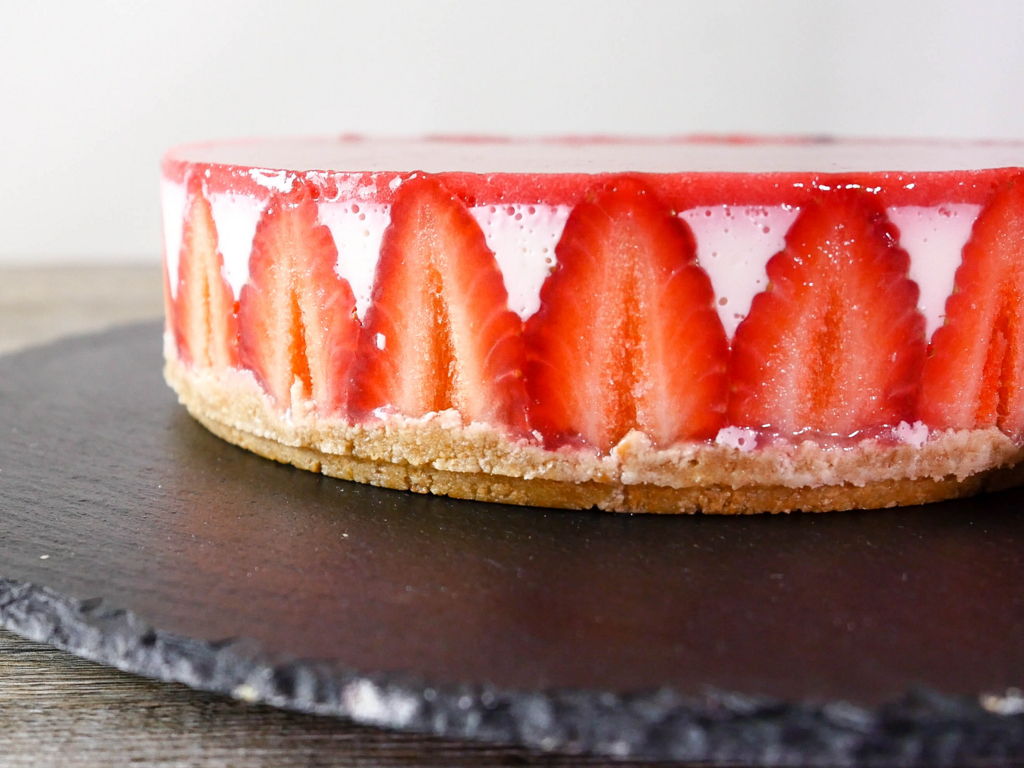
No-Bake Strawberry Cheese Cake

By: Emojoie Cuisine

This time, we will introduce how to make strawberry and raspberry sweet and sour rare cheese cake.

You can make even without the oven, you can also make use the microwave oven without any fire.

f:id:emojoiecuisine:20160406050830j:plain
Mold 18cm

Biscuits 100g
Melted butter 50g
Strawberry about 12
Cream cheese 250g
200g plain yogurt
Fresh cream 200ml (can be used instead of milk)
Sugar 90g
Gelatin 10g
Sugar 50g
Water 50ml
Raspberries 100g
Gelatin 4g

How to make

Comminuted biscuits, mixed addition of melted butter, and leveled flat spread to the bottom of the mold.

Strawberries cut in half and arrange without a gap on the side of the mold.

You have to soak the plate gelatin in cold water. If you are using a powdered gelatin please use from soaked to five times the water.

If you want to return the powdered gelatin is common to use water instead of hot water. Please use the cold water in the case of plate gelatin. We also recommend that you use the ice water The higher the room temperature

And soft and warm the cream cheese in one minute range, mixed with a whipper until smooth, add the yogurt.

Fresh cream (animal), warm put the sugar in a pan.
Here, you do not need to boil because only warm to melt the gelatin. Please as a guide to 50 ~ 60 ℃.

Whipped cream melted put the gelatin, and mix poured into the ball of the previous cream cheese.
Poured into a mold Once mixed, it chilled in the refrigerator.

Water, sugar to make a syrup boils in a pot, melt the gelatin that has been reconstituted with water, and then puree with a mixer in addition to raspberry. Is completed Once cooled more than six hours in the refrigerator poured into the mold After removing the seeds strained.

Here it was subjected to the mixer from the addition of gelatin, so finished whitish contains In this way the air, sugar, water, and boil the raspberries in a pot, the addition of gelatin over the necessary mixer, is better to finish Strain It will be finished in beautiful color.

Raspberry It is also good in the freezing, if not the color and acidity will be weak, but you can also substitute strawberries.

Notes If you use a vegetable whipped cream

Since the whipped cream is likely to separate from the heat is turned on, you must change the procedure.

Sugar in addition to the 1-minute warm cream cheese in the microwave and mix until smooth. Yogurt was added mixed and allowed to warm to 50-60 ℃ to use such as a microwave oven. Once dissolved by the addition of gelatin soaked in here, please let mix added to the whipped cream.

About the type you want to use

Usually in the candy only solidify such chilled use the Cercle. Please use all means those who have the Cercle because even simple when you take out. 
https://www.youtube.com/watch?v=j6Ss5gzeoq8

This is translated from Japanese via Google Translate

Monday, 15 August 2016

12 signals our body sends to tell us we are too stressed

https://brightside.me/inspiration-health/12-signals-our-body-sends-to-tell-us-we-are-too-stressed-215805/

Our body is an incredibly complex machine that reacts not only to external changes but to internal ones too. Dr. Susan Babel, a psychologist who specializes in depression, suggested quite an interesting theory about our body signals.
 
Bright Side would like to share some illustrations that demonstrate Babel’s theory, as well as simple recommendations on how to cope with emotional problems.


The psychologist considers discomfort and pain to be the signals of anxiety: secret fears, unresolved issues. Chronic pain is a symptom of stress and emotional problems, especially when there are no physical injuries.

Head


Too much stress is the main cause of any headache. It can happen because of worries about possible failures, little things, or constant rushing.


Set aside some time for yourself every day. Let yourself relax, and don’t worry about anything for some time. Just take some rest, and don’t feel guilty about this. Your productivity will only be boosted thanks to this time spent in peace and quiet. And you won’t be suffering from headaches anymore.

Neck


Pain in the neck signifies the burden of resentment towards other people and dissatisfaction with our own imperfections. Our neck hurts when we can’t forgive someone or ourselves.


Change your attitude towards yourself and others. People don’t want to hurt you most of the time. And you don’t have to meet your own strict expectations. Take it easy, and learn to forgive. It’s also important to think more about the things you love.

Shoulders


Shoulder pain is caused by emotional burdens and constant pressure. Maybe someone really puts pressure on you. Or maybe you can’t make an important decision and start carrying this heavy burden.


Try to share the load with a close friend — you’ll feel relieved. Even if you just talk through your worries, you won’t have to cope with the difficulties only by yourself. And maybe this will help to find a simple solution to your problem.

Upper Back


A lack of emotional support and close people around us can manifest itself in upper back pain. This happens when we subconsciously feel unloved and unappreciated.


Communicate more with different people. Don’t focus on yourself — be open and friendly. Meet new people, go on dates. And most importantly, don’t hold back feelings of affection.

Lower Back


If we have any financial worries, our lower back may hurt. Maybe we’re secretly obsessed with the idea of living a rich life, or maybe the people around us make us worry about money all the time.


Money can’t buy us happiness. It may sound like a cliché, but it’s the truth. Therefore, just stop worrying! The best things in life are free. Do what you love, and this will bring you not only joy but the profit as well.

Elbows


Elbow pain signifies a lack of flexibility and an unwillingness to compromise. We probably resist some important changes that may occur in our lives, or we’re subconsciously afraid of something new.


Sometimes we may think that life is too tough and complicated. But it only feels like this. Maybe we just make things look complicated. Be flexible, and don’t spend your energy on fighting things you’re not able to affect.

Hands


Pain in the hands means someone really needs a friend, to have some rest, and to just have a conversation with good people. If your hands hurt, it’s better for you to come out of your shell.


Try to make some new friends. Go to lunch with your work associates. Buy tickets for a sports event or go to a concert. Try to feel that you’re part of the crowd. Don’t hesitate to talk to new people because you never know where you can find a good friend.

Hips


People who are used to comfort and love living a predictable life may suffer from pain in the hips. Fear of change and making big decisions and an unwillingness to bring something new into life are the causes of hip pain.


Don’t resist the natural course of life. Life’s moving. It changes, and, therefore, life’s interesting. Think of all life changes as exciting adventures. And don’t put off any important decisions.

Knees


A big ego is probably the cause of knee pain. Our knees may hurt when we think about ourselves too much and don’t care about others at all. And also when we’re absolutely sure the world revolves only around us.


Take a look around — you’re not the only person in the Universe. Be attentive to others. Listen to your friend, help your mother, cover for your coworker. Help people more often. You can also spend some time volunteering.

Calves


Calf pain is a sign of emotional tension. Possessiveness, constant worries about a relationship, and crazy jealousy are other causes.


It’s important to learn to trust your other half. Relax and stop controlling your partner. It may be time to leave anything that bothers you too much or drives you crazy behind you.

Ankles


Pain in the ankles may mean that we forget about ourselves and need more pleasure in our life. Maybe our work takes all our time, or we don’t take our needs seriously enough and always put our dreams on hold.


It’s time to pamper yourself. Buy that expensive thing, have a good sleep, try those tasty goodies. Forget about your work for some time, and think about a romantic relationship, for example. Or plan a dream trip.

Feet


Apathy can be a cause of foot pain. It’s like our body refuses to move forward. It’s like we’re afraid of life and don’t see the point of moving forward. When we subconsciously think that everything goes wrong and our whole life is a big failure, our feet hurt.


Learn to pay attention to the little joys of life. Look how beautiful the world and the people in it are! Enjoy different tastes, sounds, the wind, and the sun. Adopt a fluffy pet, or try a new hobby. Fill your life with interesting things. Forget all the bad memories, and smile more. Find something that brings you happiness every day!

The conclusion


The conclusion is simple: love yourself and forgive yourself. Be thoughtful of others, and try not to hold a grudge against other people. Communicate more, smile (because a smile looks so good on you!), and stay healthy!